 Tennessee knew it was time to change his situation and set out on a journey to do so. After a messy divorce, custody battle, and struggles with alcoholism, his world had fallen apart.
Hoping for a better life and new opportunities, he traveled west to Seattle with everything he owned in a backpack. “When you carry what’s left of your entire life on your back, the weight is excruciating. It’s hard to look up and see what’s possible when you have this weight on your shoulders,” he said.
He lived on Seattle streets and in shelters until a random encounter at a bus stop changed his life. The stranger he met was graduating from FareStart’s job training program and told Tennessee about an open orientation the next day. “I had this feeling then like the universe is opening doors for me, making a way when I didn’t see one.”
Helping a Human Feel Human
Tennessee spent his final night in the elevator lobby of an emergency shelter, got up early and made his way to 700 Virginia. He enrolled in FareStart’s Adult Culinary Program (the precursor to the Food Pathways Program) and was able to secure a bed the very next day at the Salvation Army’s William Booth Center. FareStart provided other case management support services and core essentials which, as Tennessee said, “make a human feel human.”
“They helped me get my birth certificate, Social Security card, and license, all critical to getting a job. They opened up the “essentials closet” providing me with socks, t-shirts, pants, deodorant, toothbrushes, toothpaste, and other basic things. Not to mention food, which is essential. So now I had food, a place to sleep, and an opportunity.”
Shedding Layers
“I think one of the first things that I recognized with FareStart is how well thought out and meticulous it was. If you’re not paying attention, it’ll just happen to you and for you. FareStart takes a holistic approach to human beings, from the economic empowerment opportunities that they provide through their workforce development program, to the life skills and the social emotional learning that goes on there. It’s intense and it’s real and it’s genuine, and you can feel it.”
The program provided structure and held high expectations, which Tennessee thrived in. “After not having any responsibilities, I realized I needed that structure.”
But it became more than that once Tennessee embraced his potential for personal transformation. “It was time to stop feeling sorry for myself. I didn’t have to subscribe to a label of homeless, drug addict, or alcoholic. I fell in love with the idea of losing my entire identity and starting anew. It all starts with what you believe is possible, right?”
To do that, Tennessee had to let go of his past, put aside his reservations, be humble, and open himself to help. “There’s a saying at FareStart – ‘Empty your cup and let us fill it up.’ I didn’t know what that meant at first, but I came to understand its value: ‘Let us take care of you. Don’t be defensive. Keep an open mind. Everything you think you know – put it aside till you’re done with the program. Let us show you something you may not know.”
Opening Doors for Others
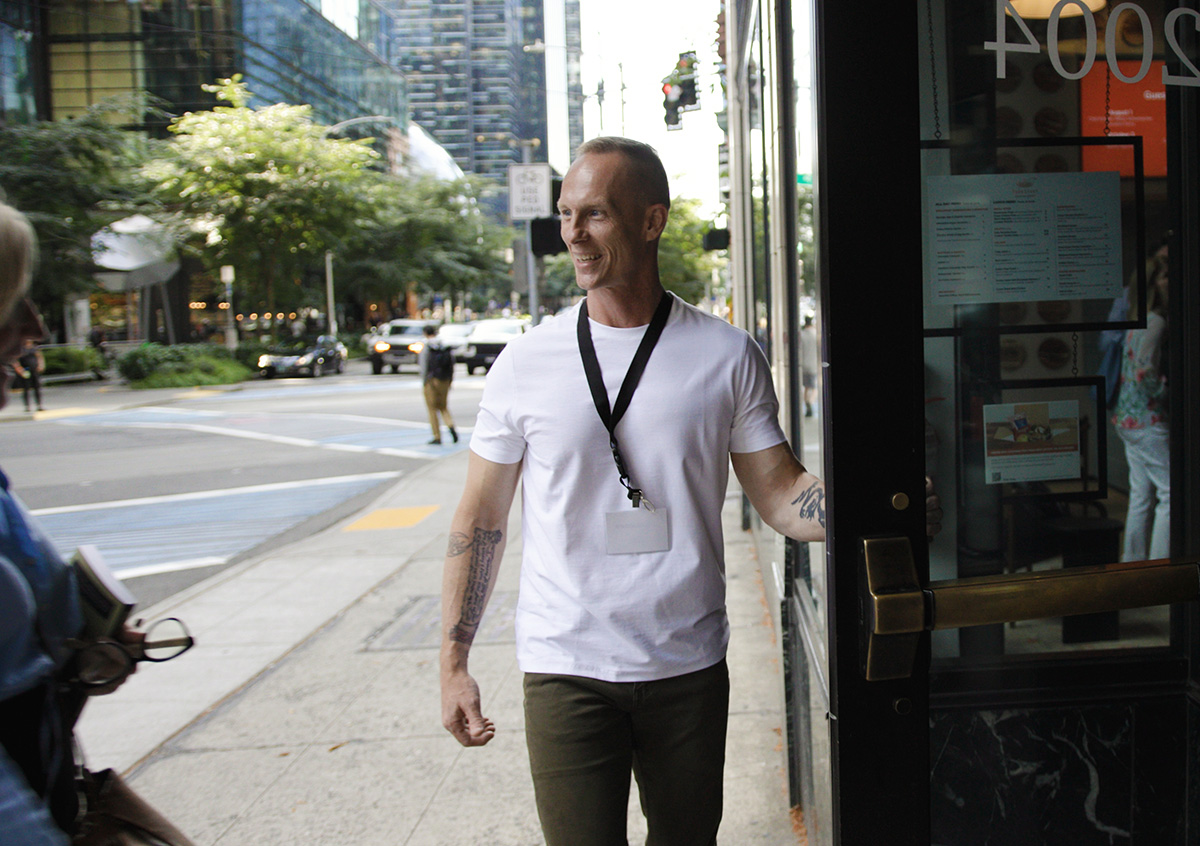 Tennessee’s time at FareStart lit a fire within him that has only grown stronger since he graduated in 2017. “It’s about wanting to take care of a community, wanting to take care of those people who want to change themselves,” he said.
Inspired by his time living in shelters and temporary housing, Tennessee has built a career in housing and real estate. “Housing stability was really my issue,” he says. “So I thought, well, this is something where I could really, really help. I had this idea that I wanted to be a part of the group that one day offered housing and continuing life skills training exclusively to FareStart graduates.”
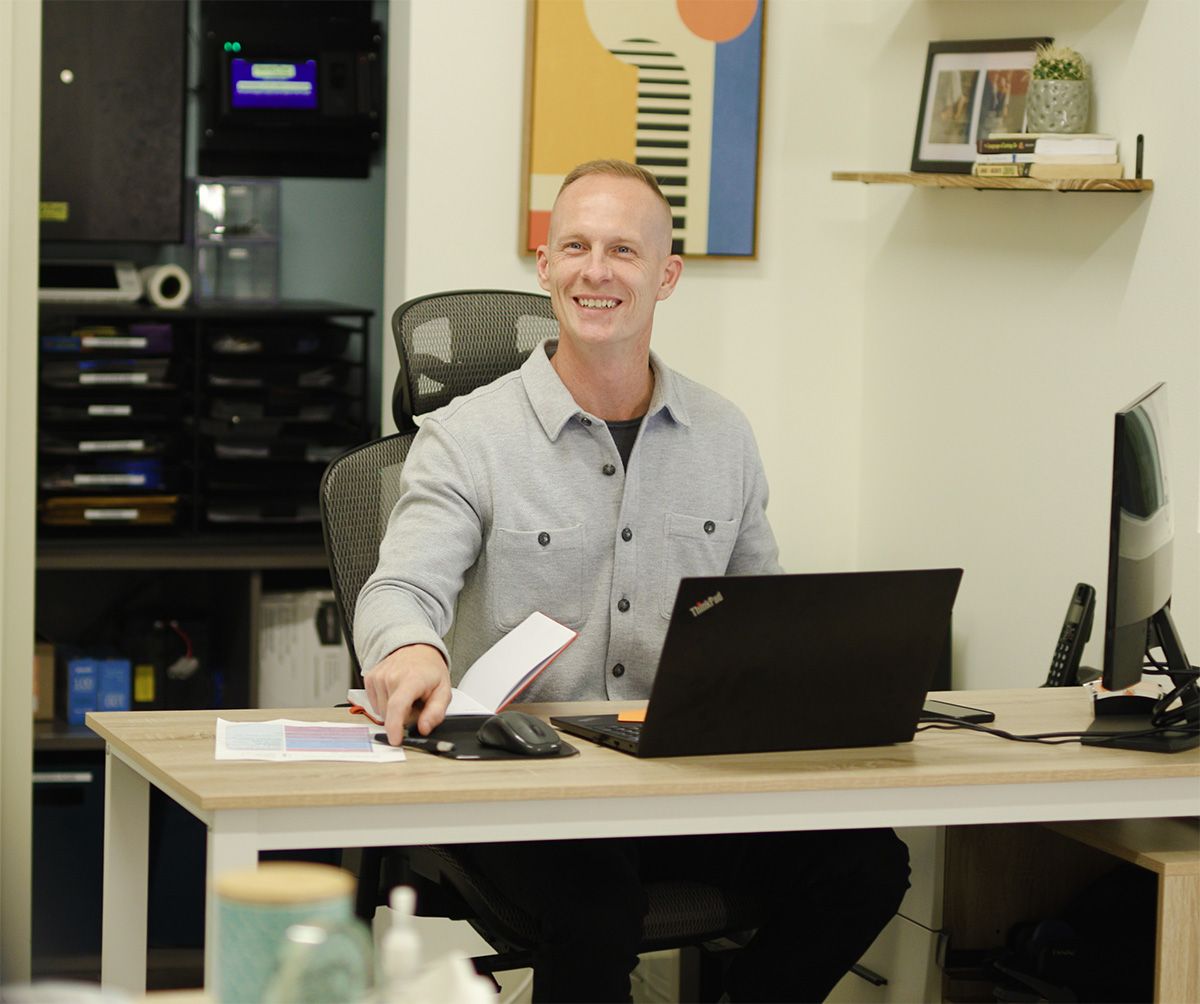 Tennessee went to work for Pioneer Human Services in their housing division and then Plymouth Housing (managing the Pat Williams apartments for formerly homeless adults). He was able to work with FareStart’s case management team to sign 13 leases for FareStart graduates. “That was a proud moment for me, being able to surround myself with fresh graduates and watch them sign a lease to their new home for the first time. I mean, it was theirs. They were paying for it, and they had an actual lease that they were protected with. That felt really good.”
Now Is The Time
Since then, Tennessee has moved into the next level of real estate management, working for a local Seattle-based real estate company where he manages multiple buildings in the Mountlake Terrace neighborhood. He is married and a proud father of two children, Max and Mae, and loves every minute of their chaotic life.
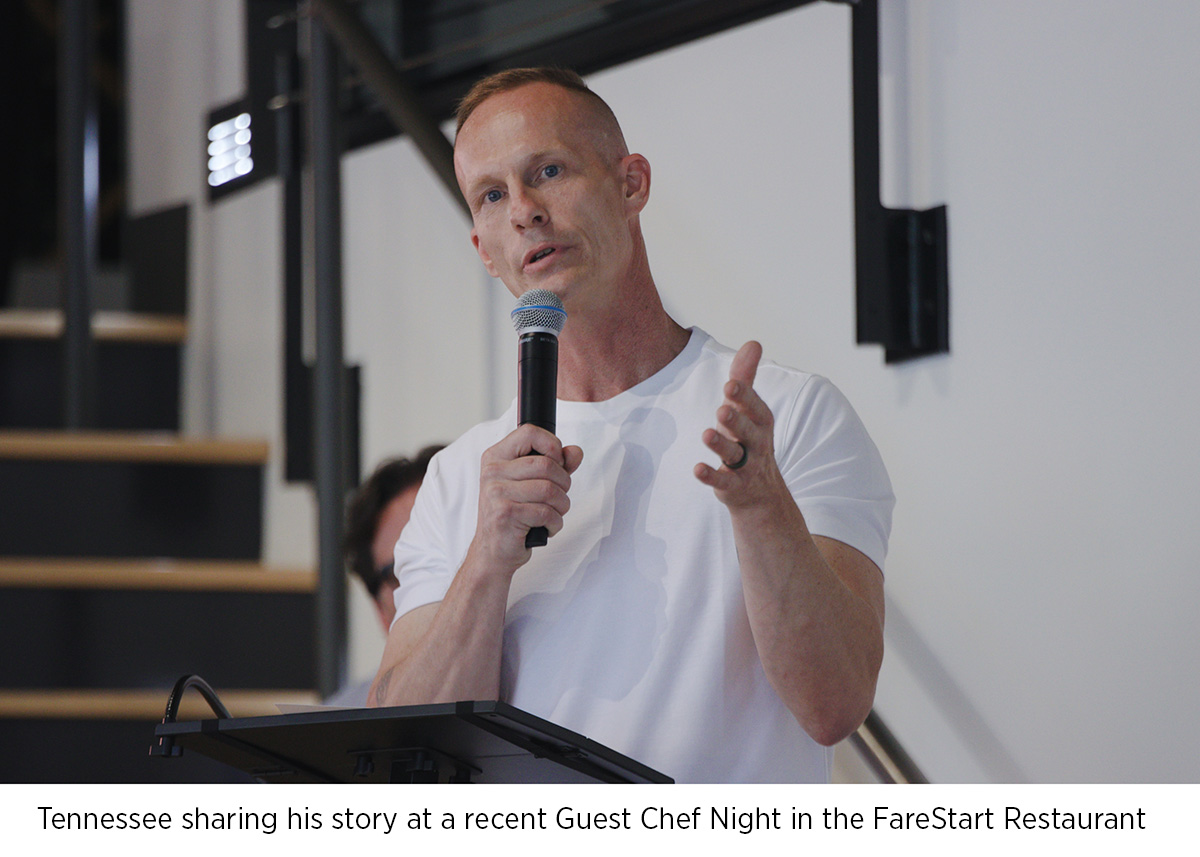 But even to this day, Tennessee knows that this is only the start of the next chapter for him. “Life is full of hills and valleys, and I think it’s what we learn in those valley moments that enable us to be strong on top of the mountains.” He still dreams of being part of the ribbon cutting ceremony for a FareStart housing program which he believes will happen one day.
Back in 2017, he opted not to make a speech at his FareStart graduation because he didn’t feel that his story was quite there yet. But he feels like now is his time.
“FareStart allowed me to be proud of who I was authentically without any shame for the mistakes I made previously. And that, for me, was what I needed. Now it’s my obligation to return that kindness and that generosity to every person I meet in this community,” Tennessee said.
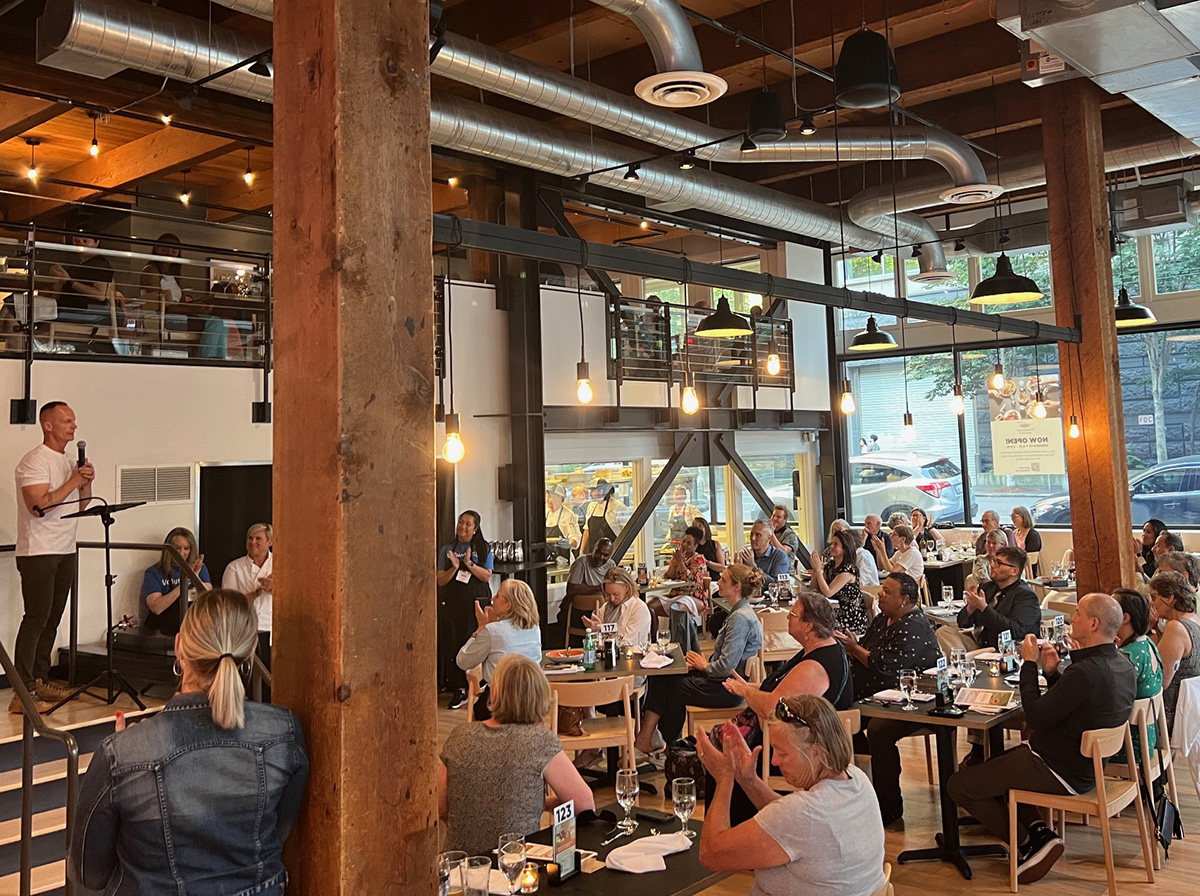 Tennessee volunteers at FareStart when he can, waiting tables and sharing his story with anyone who is willing to hear it. “It has been wonderful to witness the ripple effect of positive change with Tennessee,” says FareStart Volunteer Engagement Manager and former Chef Instructor Sasha. “Tennessee was among the first students I worked with when I came to FareStart as a Chef Instructor. I think one of the reasons we connected was because we were both starting something new and we were in that vulnerable space of humility, hope and openness to new ideas. To see him taking the skills and light that he discovered within himself and using it to support and advocate for the program has been amazing.”
Watch this video to learn more about Tennessee’s story.