Students huddle in groups of three, excitedly creating their menus for the three-course meal they’ll cook, plate and serve to classmates. They’re thrilled by how far they’ve come in the Food Pathways Program, the culinary job training at the heart of FareStart.
The “celebration lunch” is just one new element of the program, reimagined post-pandemic and offering a wider variety of training after FareStart reopened and expanded its social enterprises last year. These businesses train students, feed the Seattle community, and help fund the organization’s mission.
“We did a great job pivoting during the pandemic to train students online and within meal production in response to a crisis,” said Rekha Bhatt (she/her), FareStart’s Senior Vice President of Programs. “Now we’re pulling forward what we learned as we get back to our roots.”
The mission hasn’t changed. But FareStart is evolving to meet the moment, as needs shift for both incoming students and the larger community. For example:
- The program was shortened from four months to three months, putting students on the road to employment and economic stability sooner.
- Alternating classroom and kitchen training happens earlier, so students gain hands-on culinary experience faster.
- About 75% of student training is hands-on kitchen time, a best practice for relevant and timely learning.
- With the reopening of FareStart’s businesses, students are again able to rotate through the Community & School Meals Program and the FareStart Restaurant at 7th and Virginia—re-envisioned as a grab-and-go restaurant that offers breakfast and lunch, caters private events, produces box lunches, and hosts Guest Chef Nights.
“We’re really recommitting to our role as a culinary job training program, where the end goal is helping people find employment, stabilize and thrive,” Rekha said. “We’re still feeding the community in those hugely important ways, but it’s exciting to bring back the restaurant work at our core.”
Program Evolution Leverages Lived Expertise
Chef Casey Long (she/her) feels lucky.
She came back to FareStart as a staff member during the pandemic after graduating from the program in 2016 and later working at the Goldfinch Tavern at the Four Seasons. Once in-person training became possible again at FareStart, she jumped at the chance to help design and refine a culinary curriculum that fit the training sites available.
“When I first came to FareStart, I was not the best version of myself,” Chef Casey said. “To grow from being the student to becoming the teacher is more amazing than I could have imagined. And creating the curriculum I always dreamed of is huge for me.”
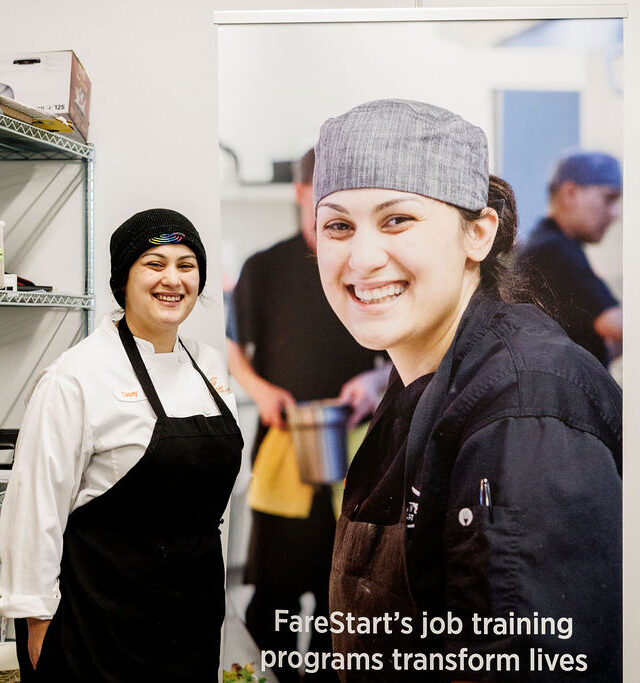 From FareStart’s archives and her notes in dusty boxes, Chef Casey and a team of trainers, chefs and supervisors scoured the old curriculum for what would still work. As a former student, Chef Casey was able to highlight some culinary techniques she wished she’d learned, such as how a cuisine can have not only mother sauces but mother spices.
“If you are cooking Mexican cuisine, you’re going to grab the cumin,” she said. “I didn’t know that at all. I was bringing all kinds of weird spices into the mix.”
Now students get a spice guidebook. Handouts include a stack of cheat cards for converting ounces to pounds and more. Students take a class Chef Casey created called “Dressings, Marinades, Glazes and Dips.” They play games like cooking-lingo bingo. They resolve scenarios: Service is in 30 minutes, and your gravy is too thin; what are you going to do?
“We’re staying true to the program that built me, so to speak,” Chef Casey said, “plus we’re bringing in all those elements to hit the different types of learning. It was a heavy lift, but we did it. And it’s super cool to add things I didn’t get that I wish I had.”
One of Chef Casey’s favorite additions: the celebration lunch.
“It’s such a joy,” she said. “The pride students take in plating it and making it fancy, the meal they create, the ‘Look at me, Chef, I’m doing this’—it’s so cool. There’s no way to really explain that feeling.”
Return to a Phased Learning
The program has returned to three phases, each four weeks long, that grow more complex and build upon the skills learned in earlier phases.
The concepts for these and the other changes came from input gathered from FareStart’s enrollment team, case managers, former students and in-house national consultants. All informed a “really thoughtful, human-centered design process,” Rekha said, to align the program with the new social enterprise configuration and national best practices.
Phase 1
Orientation begins with cohort team building, tours, obtaining a food handler’s card and getting to know the trainers who will be teaching both culinary techniques and the production side of the FareStart businesses. This view of the full enterprise borrows from the culinary practice of mise en place, or “putting in place” each ingredient to understand the big picture before beginning.
“We emphasize to students that you are not just receiving job training; you are giving back, contributing to feeding the greater Seattle community,” Rekha said. “It’s important to us that students get the magnitude of that.”
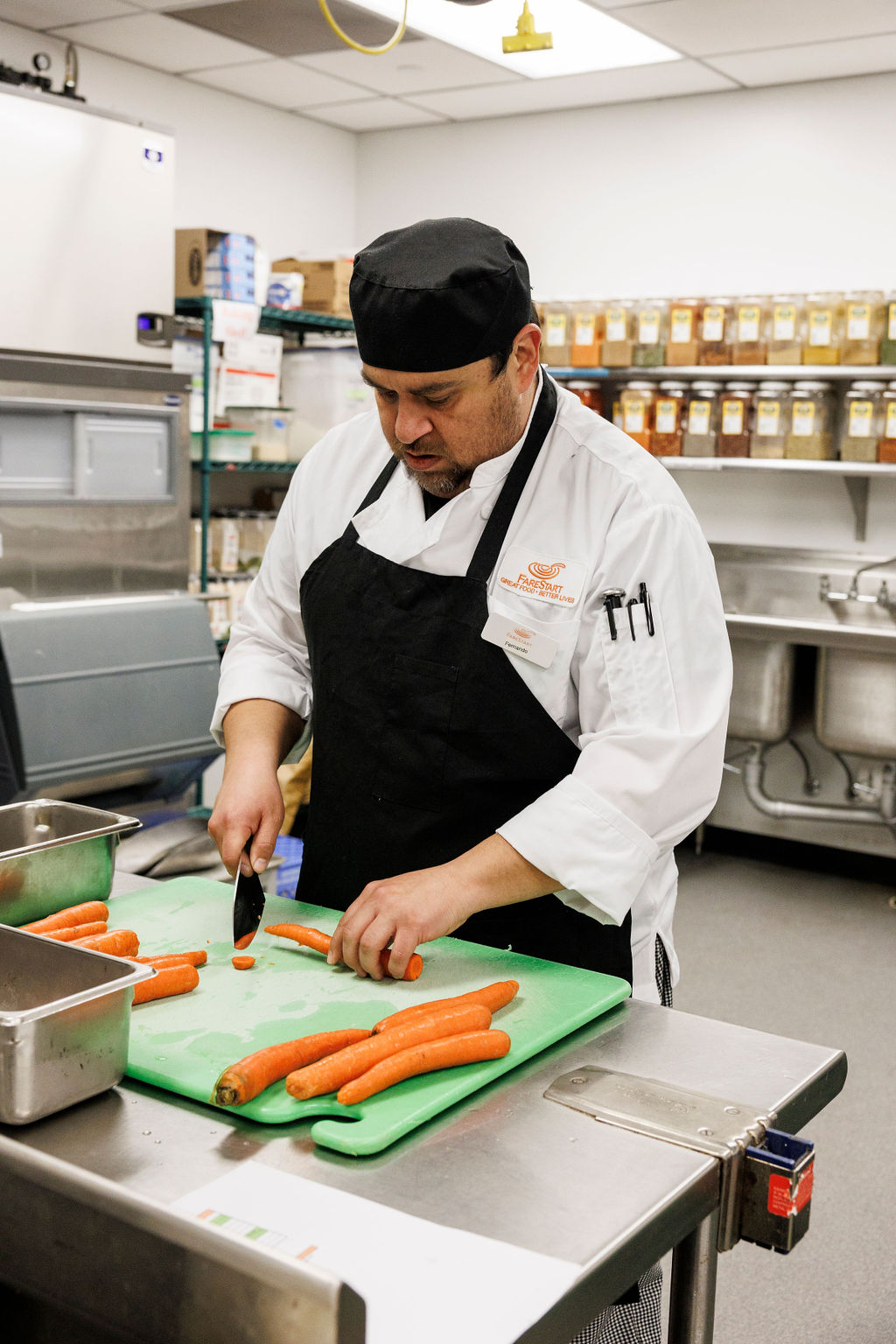 Initially, students work with simple ingredients and a predictable schedule. They get over some shock. As Chef Casey put it: “They’re probably like, ‘What in the gravy is going on here?? 150 pounds of carrots?! I don’t want to cut that!’”
In the classroom, students learn basic knife skills, kitchen math like how to scale a recipe, kitchen communication, having a sense of urgency, food safety, labeling, storage and more. During the rotation, students collect and clean the produce—tens of thousands of pounds—that goes into Community & School Meals and the Mobile Community Market. It’s powerful for students to see the origins of the produce sourced from local farmers and to play a part in getting quality fruits and vegetables to low-income communities with little access.
And students take classes in the so-called “soft” skills that need to be fortified and will serve them in any context: communication, self-empowerment, financial literacy—the latter made more tangible by the stipend students receive based on attendance.
At the beginning of this phase, case managers ensure that students have a predictable place to live with showers and laundry, get on-site mental health services through Sound Health, and have access to other wraparound social services that help set them up for success, including transportation, food, technology and treatment for substance use disorder.
Phase 2
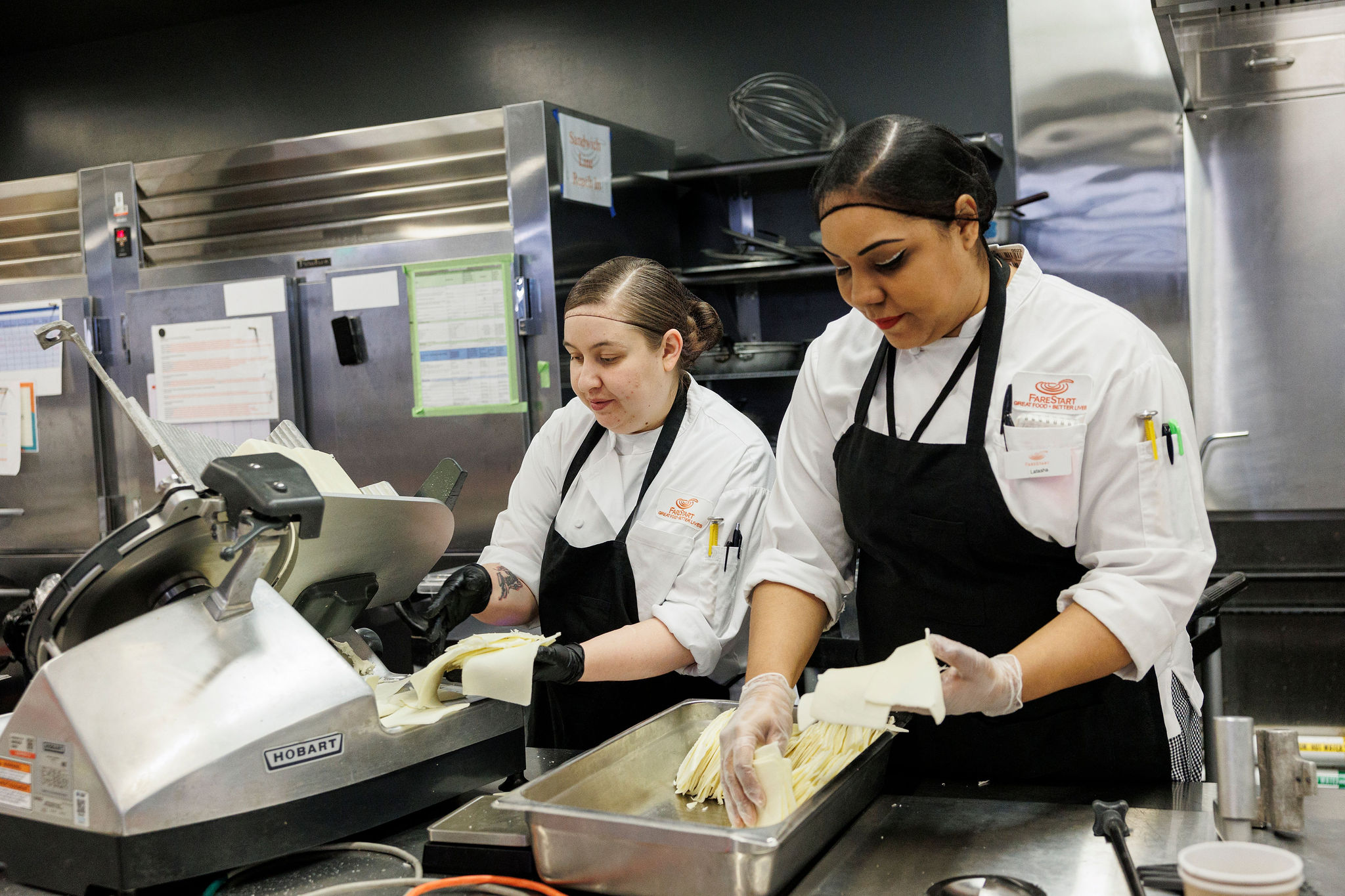 Students progress to the Community Meals kitchen located at Interbay (donated and custom-built by Amazon). Here they make meals going to nonprofits and shelters.
They get exposure to different ingredients (learning to tell a rutabaga from a beet), try additional cooking methods, manage the inventory and prep for a salad station, learn to stay in control in a high-stress environment, and reaffirm and build on what they learned in Phase 1. Students who might be timid have chances to find their voice, which might mean yelling over the slicing machine to coordinate next steps in the production process.
Durable life skills training now switches to a job readiness class: resume preparation, mock interviews and applying for jobs.
Students also get prepared for Phase 3—the most advanced—with, as Chef Casey puts it, “things to do, things not to do and things you’re probably going to do that you wish you didn’t do,” she said. “That’s a huge thing I teach. Don’t be afraid to fail, because it’s still learning.”
Eight weeks in, students are in the swing. “Watching them let their walls fall and come into their own styles, their own person, is just magical to watch,” Chef Casey said.
Phase 3
Now it’s time to work the line in a restaurant kitchen. Students understand calls like “Fire!” (cook the dish), “All day” (how much of that item do you have for the rest of the day?) and “86!” (we’re out; pull it off the menu). Students also do catering prep, including box lunches, and serve the public in Phase 3.
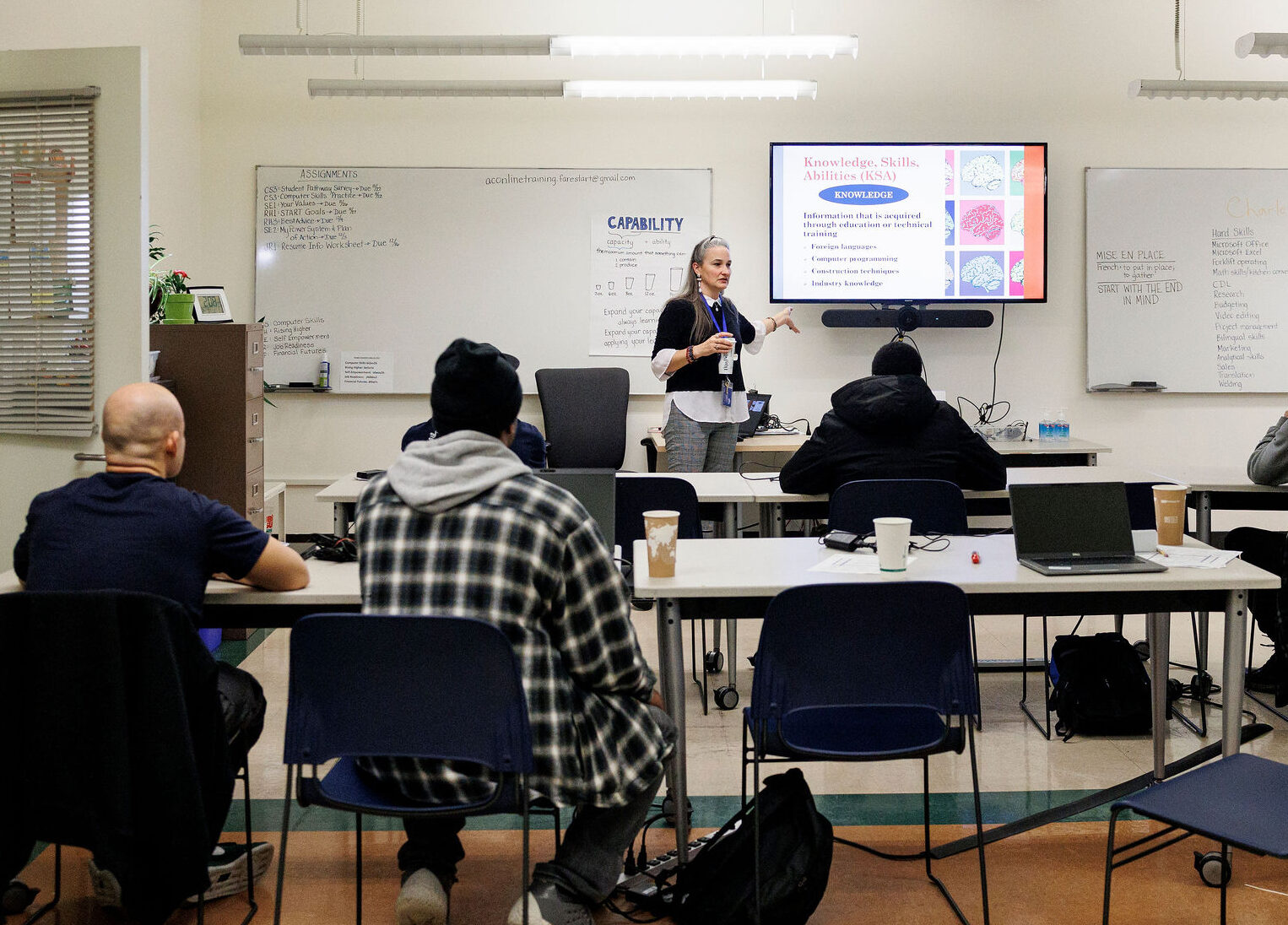 Job readiness skills shift to tailoring resumes to specific positions, continuing mock interview practice, and attending a job fair to meet FareStart employment partners. Partners range from hotel restaurants and hospitals to grocery stores and airline catering vendors.
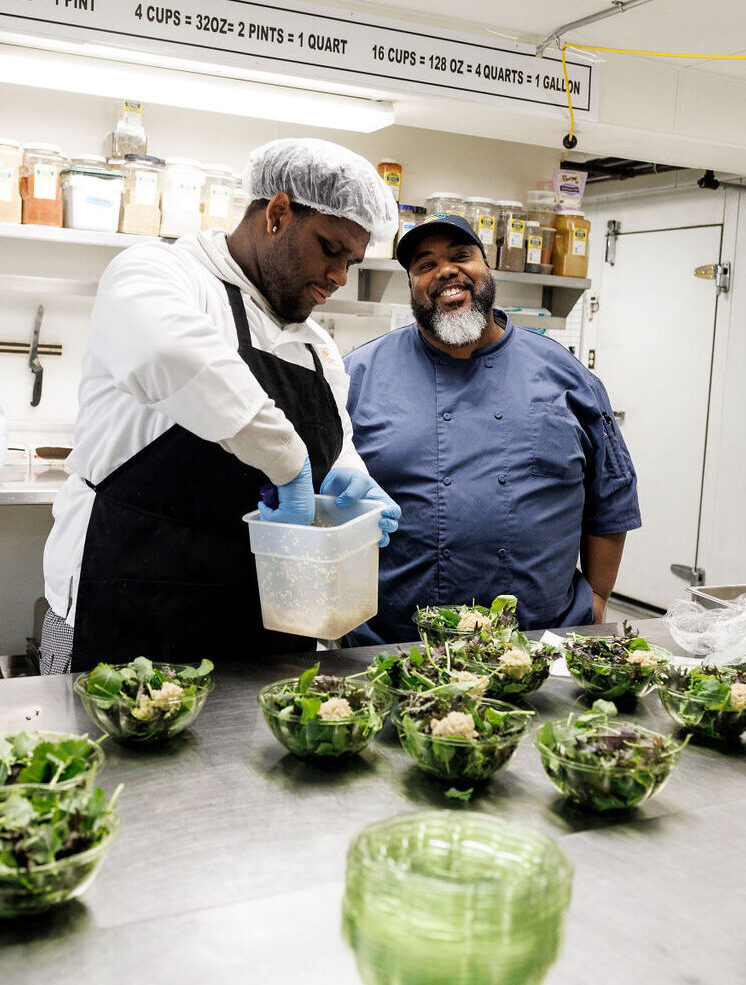
On Guest Chef Nights, where a premier local chef designs a three-course menu for a public dinner, students work alongside that chef to prepare the meal. “It’s a very exciting, real-time mentoring and networking opportunity to be working alongside well-regarded chefs who run local businesses,” Rekha said.
By the end of the 12-week program, graduates have gained so much: more stability, a community of support, durable life skills, a new perspective on what they’re capable of, and a sense of agency. And, within three months, most will have landed a job. FareStart continues to provide support for a full year after graduation.
Dreaming of Serving More Students
This year at FareStart is about rebuilding and stabilizing: making sure programs are high quality, the curricula are strong, the full staff is trained, new measurements and feedback mechanisms are in place, employment-placement numbers are rising, and funding streams are diversified so that a higher percentage of FareStart’s revenue again comes from the restaurant, café and other social enterprise businesses.
And then?
“We are dreaming big about expanded impact,” Rekha said. “How do we serve more students?”
Possibilities include:
- Partnerships with entities that have onsite kitchens and participants, such as teen rehabilitation centers.
- More social enterprises, so that training can expand beyond the current 16 students per cohort.
- More employers as partners, not only restaurants but across the food-service industry.
- Making a dent in the larger problem of how our region is supporting people out of poverty and into upward economic stability.
“It’s a really exciting time to be here,” Rekha said. “The FareStart team is incredible. The businesses have been so thoughtfully rebooted. Seeing our longtime volunteers and donors physically sitting again in the restaurants, walking through kitchens full of students is invigorating.”
Graduations happen every four weeks. “It’s the best part of the job,” Rekha said. Students talk about how much they’ve accomplished, how much they’ve surprised themselves, how proud of themselves they are. Staff are thrilled to tell them the same.
“A community wraps around each student,” Rekha said. “Our work is not possible without community.”
In 2025, FareStart plans to enroll over 400 students across all job training programs — close to pre-pandemic levels of student enrollment. Read stories about FareStart graduates and the impact of our programs here.